Showing posts with label writer. Show all posts

Thursday, September 4, 2008

My First Paragraph

It takes guts to post the first paragraph(s) to a novel you've written but haven't yet published. Sending it out to agents and/or publishers pales beside posting that one solitary paragraph on a blog. Agents can reject so painlessly -- send you that little form letter that helps convince you that so & so is just not accepting anyone these days and it has nothing to do with your writing or lack thereof.

But posting on a blog? You've preened and polished and crafted the best opening you know how to write. What if people laugh? or cringe? or wonder, What is she thinking, posting something that asinine? I think paranoia and shaky self-confidence stalk the writer, no matter how many times he's been published. So kudos to Ken Kiser for braving the wilderness and posting his first paragraph. I'm duly impressed. Others (Anthony Pacheco, shariwrites, dianegallant, among others) have jumped in as well, feet first and welcoming comments, thoughts, constructive criticism, and general applause. I can do no less. Here are the opening paragraphs to Ceilyn's Calling.

Ceilyn sprinted down the darkened hallway, conjuring a light spell with his right hand. The light flared, revealing the thick-set demon hurtling towards the heavy monastery door.

“Halt!” the boy commanded, his voice ringing with power. He hurled the magical sign of restraint, willing it to stop.

The squat hell-creature swung around, nostrils flaring, chest heaving. The stench of unwashed rags assaulted Ceilyn, and he flinched. The demon’s eyes, crusted over and rimmed with red, narrowed, sensing fear. He took a step back toward Ceilyn.

Ceilyn inhaled sharply. Retreating, he fumbled in his waist pouch for the tiny glass vial. With a thundering roar, the demon threw his head back, teeth glinting in the spelled light. He shook his body, thumping his chest before lowering his head to charge. He snarled, breath fouling the air.

Ceilyn closed his eyes, mouth moving in the ancient spell of reverse conjuring. He held the vial up, swirled its contents several times, then flung it toward the charging beast. But the final word wouldn’t come. Fear billowed up in his chest, blocking his mind, his throat, his words.

Wednesday, August 20, 2008

Find a Literary Agent

Book finished? Revised four times? (Why is it that every time I talk with a "serious" writer they tell me, "I'm on my fourth revision"? Is four the magic number? Am I missing something? Have I lost out simply because I didn't do the requisite four?!) Have you toiled over your synopsis? Have you executed a finely turned query letter? Well, then, it's time to look for a literary agent. Good luck.

Actually, this post is not about finding the right literary agent. In fact, I think it's best to start with what this is not about.
  • It's not a list of agents. You can find that anywhere. Try Guide to Literary Agents, either online or in book format.
  • It's not a matching service. Zirdland is currently testing one, however, if that floats your boat.
  • It's not a get-rich-quick scheme. But I do have a large tract of undeveloped land to sell if you're interested.

There is a ton of information out there about each of those items. (Read my previous posts, if you're bored. Truly.)

What I've discovered, however, is that there are literary agents out there blogging who are phenomonal writers in their own rights. Treasure troves of information, inspiration, and motivation, they provide real tips in a timely fashion. So, my advice is to find a literary agent who "speaks" to you; who blogs on topics near and dear to your heart; who is honest about the work and the glory. You don't even have to query her. You just have to listen.

My contribution to the blogging agent list: Nathan Bransford. I'm not only impressed with his prolific blogging, but also with his uncanny ability to blog on topics I'm currently needing. Or even on topics I didn't know I needed but found great use for. Check him out.

Are there agents you subscribe to? Do you find yourself checking one agent blog in particular simply because there's always a gem nested there? Have you ever queried an agent that you found via blog? Let me know if you've found the perfect agent blogger; I'm always looking to expand my horizons.

Thursday, August 14, 2008

Agents 101

Disclaimer: I am not an agent, nor do I have an agent myself. These are simply insights I've gleaned as I've listened in on the writing world. If you've anything to add, please post!

Via conferences, the Internet, and conversations, I've heard friends, Romans, and countrymen discuss their various books and agent experiences. It occurs to me that there are not only some common themes, but also common misconceptions. This is Part I in a series of III that attempts clarification of the Agent World.

1. Agents are human, too. Although it may seem as if they're the gatekeepers, warding you off from the inner sanctum of the Published Ones, they're all very human. They have hopes, dreams, and desires, just like you. And, oddly enough, their world doesn't revolve around you. My point? Don't take their idiosyncrasies personally. You don't know if Agent X has just found out that her mother has cancer or if Agent Y has just broken up with his girlfriend of nine years. Cut them some slack, and they're more likely to cut you some.

2. Agents want your book to be "The One." In a sense, agents are the gatekeepers. It's their job to search out the next great American novel or the next epic fantasy, and they are Desperately Seeking Susan or David or Theo. If you've done your job and sculpted that literary "intersection between art & commerce" then you're on the right track. But, if you're mewling about an agent just not appreciating your artistic execution of Banana Drying In Lavender's Window, then take a few minutes (or days) to re-evaluate. Then look for a different agent or start a different project, but don't blame your lack on the agent.

3. Agents want to work with you. More important than getting an agent is finding one who complements the person you are. If you're willing to take suggestions and/or guidance, the relationship will be mutually beneficial. If you are so "principled" that you refuse to bend on anything, you've already limited your success. Your agent wants to be excited about your project, brokering the best possible outcome for you. If your personality prevents any of that, then you best look for a different agent or an altered attitude.

Wednesday, August 13, 2008

To Prologue or Not to Prologue

Each one of my books in The Chillwane Chronicles trilogy opens with a prologue. In my mind, a prologue provides upfront information not directly revealed in the first 50 pages; it weaves an element of continuity through the three books; and, frankly, it provides an instant tinge of mood. Now, I don't pen lengthy prologues. I figure (and this is just me) that if I can't say it in a page or less, then it needs to be part of the exposition or wiggled into the conflict.

Minju Chang, an agent with BookStop Literary Agency since 2006, disagrees. There are few times when a prologue is needed, she says. When she looked over the opening pages of my manuscript, she asked pointed questions about the purpose of the prologue. To my credit, I think I defended its existance adequately enough. But I can't thank her enough for her willingness to be that difficult combination of sharply critical and graciously kind.

Because, ultimately, the prologue didn't matter. I tucked my tail, sidled into my study, and took a good, long, hard look at each one of the prologues. And deleted them. Even though I had initially thought them integral to the story, each was entirely dispensible. Minju was right. And thanks to her insight, I have a stronger beginning: more solid, more impact.

Sunday, August 10, 2008

Terry Brooks: Genesis of Shannara

As a writer, it's almost cathartic to see the connections between events, the spiderweb-thin threads that weave us and our experiences of one another together. It is also humbling to realize that each of us is just one of 6.8 billion on planet Earth.


Connection 1: Just about a year ago, when I contacted Terry Brooks via his website to ask him to be the keynote speaker at our small, local Young Authors' Conference, I received a kind email from his manager: Terry Brooks is feverishly finishing his next novel. Not even his family is seeing him right now.


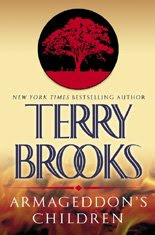
Connection 2: Fast forward a year. The Gypsy Morph, third and final book of the Genesis of Shannara trilogy, won't be out until August 26th, 2008. Imagine my surprise when, at the final event of this summer's PNWA conference, we all receive a free copy of Terry Brooks' Armageddon's Children, the first book in the Genesis trilogy which, in a simplified nutshell, spans the gap between the Shannara and the Word & Void books.


Connection 3: The News? The book was a teaser, designed to whet the appetite. So, save up your frequent flyer miles! Terry Brooks will be the keynote speaker at the July 2009 Pacific Northwest Writers Association Summer Conference.


Churning out a novel a year, Terry Brooks has an entire novel finished by the time the current one goes to print. Whether you love him or hate him, Brooks is a titan of the fantasy world, intent upon retaining the crown of authorship.

Friday, August 8, 2008

Double Trouble

Today's the day! 08-08-08 marks the release date of the next Billibub Badding's mystery (The Case of the Pitcher's Pendant by Tee Morris), as well as Philippa Ballantine's Digital Magic. Check these two out via http://www.amazon.com/ and add 'em to your shopping cart. Enjoy.

Here are my brief reviews:

I am not a baseball fan, but that doesn't matter when it comes to The Case of the Pitcher's Pendant. If you like witty dialogue and clever plot twists, then this is a must-add to your library. Tee Morris skillfully weaves Chicago, lit noir, and fantasy into a kick-butt narrative of angsty fun. If you haven't giggled or tee-hee'd in a while (no pun intended), then definitely purchase this puppy. You won't regret it.

Carefully crafting a dark world of paranoia, rage, and destruction, Ballantine manages to weave in those bits of silver lining that we all crave. Although Chasing the Bard was a delightful frolic and immensely enjoyable, Ballantine has upped the stakes and taken her writing to a new level in Digital Magic that fairly screams masterful finesse. Don't miss out on this 'through the glass darkly' adventure.

Sunday, July 27, 2008

Five Top Books for Aspiring (or Established) Writers

Straight from the horses' mouths: last week I was fortunate enough to be in the audience when a group of agents and editors opined on their favorite writing books, offering a coveted glimpse into their messy, chaotic, or serial-killer-neat-and-tidy minds. The truth is, of course, that they're all looking for the next Harry Potter or even A Million Little Pieces (it did sell, didn't it?) with the twist of the century. Well, make it a little twist. Witty and clever, but little. It needs to be recognizable enough that the audience laps it up, buys advance copies, and blogs ad nauseum about the cleverness. Too different, and it's a snoozer. This is all encouraging for those of us who write, of course, because we've all read Ecclesiastes, and it was bloody depressing to realize that there was "nothing new under the sun" way back when we were all starting out. Joy comes in the morning, however, and with it came these book recommendations. I list them here for you: The top five books on writing for writers...

1. Self-Editing for Fiction Writers by Renni Brown and Dave King "Self-Editing for Fiction Writers literally had me writhing. At least my toes curled and I kept saying, "Ouch," as chapter after chapter critiqued yet another one of my cherished writing habits ('Tom Swifties' for one). I have two suggestions for potential readers: (1) bypass "Self-Editing for Fiction Writers" completely if you have a delicate ego; (2) if you do read it, stock up on several different colors of magic markers and keep your manuscript nearby. It will soon be streaming with color." By E. A. Lovitt starmoth

2. The Writer's Journey: Mythic Structure for Writers by Christopher Vogler "As a fan of Joseph Campbell and amateur writer, this book really appeals to me. It is more than just a how-to for aspiring novelists, it is a how-to for life. It is geared toward the writing of novels and stories with human drama and interaction, which makes it a bit more specialized." By Kort Kramer

3. The Sell Your Novel Toolkit by Elizabeth Lyon "Elizabeth Lyon's new book, Sell Your Novel Toolkit, provides a detailed roadmap for producing a well qualified query letter, synopsis and tips to manage that all important marketing strategy." By dhanselmo

4. Bird by Bird by Anne Lamott "I'm hooked on Lamott. She slaps me in the face with her startling revelations, nudges me in the ribs with her unpredictable humor, and prods my frozen little writer's hands back into action with warm compassion. This book won't solve the mechanical aspects of my writing, or lead me on the path of structural excellence, but it will spark my creativity, free my characters to be true to themselves, and, ultimately, shake me from my doldrums back into the writing mode." By Eric Wilson novelist

5. The Forest for the Trees: An Editor's Advice to Writers by Betsy Lerner
"This book is about what motivates writers (and editors) and gives you some insight on how the system works. Lerner talks about different kinds of writers - some rely on instinct or "natural talent", others are driven by anger, hope, or any other emotion. She encourages writers to be brave, to take a chance, but to recognize likewise if you've gone too far over the edge (it's a cliff, after all!). Lerner encourages writers to do their thing. She oozes confidence between the lines that a reader can't help but be caught up in." By Phome

Friday, July 25, 2008

When Yasmine Galenorn had to cancel her workshop at PNWA (she writes the Otherworld/Sisters of the Moon Series for Berkley), I feared the worst. What dried-up has-been fillers would the conference wizards drag in to save the day? Well, they brought in five fillers, and it turned out to be the highlight workshop of the conference.

World-building with Caitlyn Kittredge, Richelle Mead, Kat Richardson, Cherie Priest, and Mark Henry (don't you love a man with two first names?) was informative, raucous, interactive, and full of messy, synergistic fun. Not previously acquainted with the urban fantasy line, I didn't know any of these chic and possibly fey authors, but I planned on getting to know them asap. After driving six hours home, my first stop was at the local book store.

Tomorrow's post will deal with the points they made in worldbuilding.

You can also catch up with Cherie Priest and many other urban fantasy authors at http://community.livejournal.com/fangs_fur_fey

Thursday, July 24, 2008

Must-have Book: Blake Snyder's Save the Cat!

Kudos to Blake Snyder who has written the definitive work on storytelling of this decade. Don't get me wrong, you still have to own Joseph Campbell's Hero With A Thousand Faces, and you should still have a dog-eared copy of Christopher Volger's The Writer's Journey. But Blake Snyder is where it's at today. And ignore the secondary title on his book that says, "The Last Book on Screenwriting You'll Ever Need," because this is a book for anyone who wants to tell a story. Period.

Instead of rushing out to see The Dark Knight like everyone else, I spent the weekend at PNWA. On Sunday, Blake Snyder spoke -- and, frankly, he rocked my world. My first novel flipped open, pages fluttering, all there in my mind's eye. Parts I didn't even know I had floated together, spinning mid-air like some mystical puzzle piece. The scenes I didn't even know were missing snapped into place, perfect fits. I came home to buy the book. (I think every book store was sold out of his books in all of Seattle. I got the last copy available in Lewiston yesterday, and it looks like I'll have to buy Save the Cat! Goes to the Movies on-line.) Ceilyn's Calling will be a tighter, more solid first book because of this experience. And even though I have that exciting agent lure of "Send me the first three chapters and the synopsis" beckoning, I'm taking time out to make sure I've followed all fifteen beats of Blake Snyder's beat sheet. Becoming a master-beater takes time, don't you know.

Tuesday, July 22, 2008

Royce Buckingham, author of Demonkeeper

I haven't read his book yet, but if it's anything like the man, I'd say it's a real winner. I've put in a hold for Demonkeeper at the library (it's already checked out, don't you know!), and I'll post my thoughts as soon as I've a chance to read it. But this isn't about the book; it's about the man: Royce Buckingham. Doesn't that just roll off your tongue?

I had the chance to run into him at the PNWA summer conference this past weekend, and I have to say: he's the genuine deal. Not only is he entirely delightfully loveable, but he's likeable, which is saying a lot, if you know what I mean. He is sincere, down-to-earth, and real. The story spread like wild-fire when he teared up in a session: in hushed, awed voices, new friends told me that Mr. Buckingham almost broke down when he talked about a couple of fan letters he had received from 10-year old boys. In spite of book deals and a movie deal, he is most moved by the missives of two young fans. In a word, I find I'm impressed. And that, my friend, means a lot in this far too shallow business. It certainly made a fan out of me.

Pacific Northwest Writers Association

For any writer who needs exposure, tips, an agent, or just a shot in the arm, PNWA's summer conference kicks butt. From big name authors to down-and-dirty, roll-up-your-sleeves kinds of workshops, this conference delivers what it promises: a chance to belong to the writing community.


Link
Elizabeth Lyon, author of The Sell Your Novel Tool Kit, offered invaluable advice, going over query letter do's and don'ts. I definitely recommend her book(s). Email me if you want some of her notes.